Explore this post with:

In New York City, where space is precious and every design decision carries weight, luxury renovation is becoming less about making a statement and more about creating spaces that feel considered, comfortable and enduring. For 25 years, New York Kitchen & Bath (NYKB) has been at the center of that evolution, completing more than 15,000 renovation projects across the five boroughs. Drawing on decades of experience in New York residences, the design-build firm is seeing a distinct shift in what homeowners want from their kitchens and bathrooms in 2026.
The mood is warmer. Materials are becoming more tactile. Patterns are returning. And while homeowners continue to desire the visual drama associated with luxury materials such as marble, they increasingly expect those materials to perform as beautifully as they look.
The result is a new interpretation of New York luxury, one rooted in individuality, practicality and timeless design.
A Warmer Approach to the Kitchen
 One of the clearest shifts is the growing preference for natural wood, particularly white oak.
After years of high-contrast kitchens dominated by painted cabinetry and stark black-and-white palettes, wood-grain finishes are bringing a sense of warmth and texture back into contemporary interiors. White oak, in particular, works effortlessly with neutral stones, muted hardware and natural flooring, creating kitchens that feel sophisticated without becoming severe.
For New York apartments, the appeal is also practical. Lighter woods can help reflect available natural light, an important consideration in homes where windows and daylight may be limited.
Walnut and other darker woods remain popular for homeowners seeking a richer, more dramatic atmosphere, but the broader direction is unmistakably toward interiors that feel inviting rather than imposing.
The Rise of Quiet Luxury
The shift toward warmth is also influencing finishes. Ultra-glossy surfaces are increasingly giving way to satin cabinetry, honed countertops and other low-sheen materials. These finishes absorb and reflect light more subtly, allowing texture and craftsmanship to become part of the design experience. The effect is a quieter form of luxury, one that does not depend on shine to communicate sophistication.
High-gloss acrylic cabinetry still has a place in sleek, contemporary interiors, but today’s more nuanced approach often pairs matte or satin surfaces with natural stone, wood and softly textured materials.
Tile Becomes an Expression of Personality
Perhaps nowhere is the movement toward individuality more apparent than in tile.
The familiar 3-by-6-inch subway tile remains a classic, but homeowners are increasingly looking beyond predictable layouts in favor of mosaics, distinctive patterns and more artisanal expressions.
Mosaic tile allows designers to introduce color, geometry and texture without overwhelming a space. In kitchens, it can transform a backsplash into an architectural focal point. In bathrooms, it can add a layer of artistry to floors, shower walls or feature areas. The change reflects a larger desire for homes that feel personal rather than interchangeable.
Herringbone Adds Architectural Rhythm
Classic patterns are also experiencing a resurgence, with herringbone emerging as a favorite way to introduce movement and visual interest. Used in wood flooring, herringbone brings dimension while retaining a timeless character. The pattern can also transition naturally into kitchens and bathrooms through tile applications, creating continuity between materials and spaces. Its appeal lies in its balance: distinctive enough to feel designed, yet classic enough to resist becoming a passing fad.
Beauty Meets Performance
For New York homeowners, aesthetics are only part of the equation. Materials also have to withstand real life. Busy households are increasingly looking for surfaces that deliver the appearance of natural stone while offering greater resistance to the wear and maintenance demands of everyday use. Engineered and ultra-compact surfaces such as Dekton are gaining attention for their stone-inspired appearance and performance characteristics, including resistance to scratches, heat and stains.
Bathrooms Become Private Retreats
 If the kitchen is becoming warmer, the bathroom is becoming more restorative.
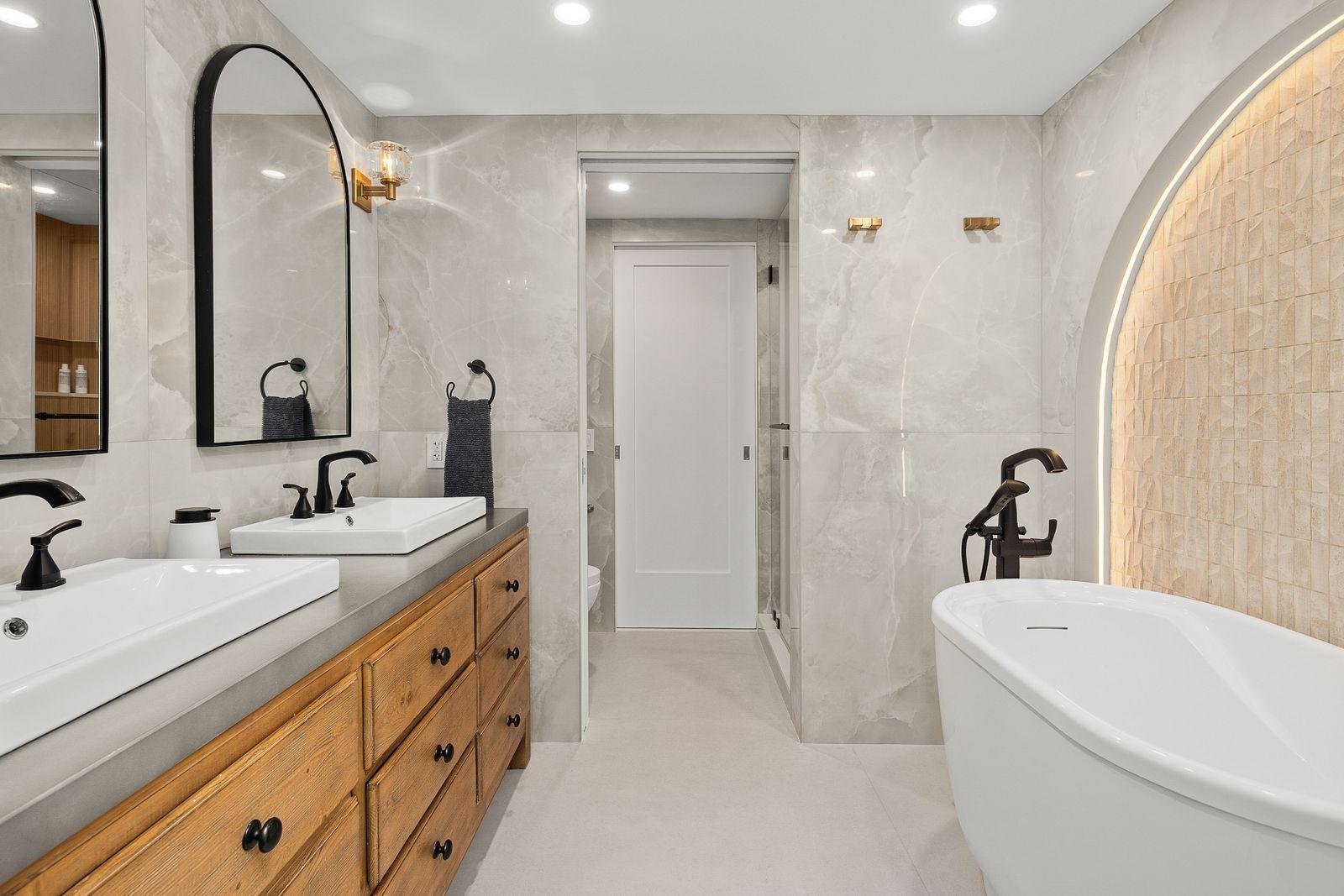
Travertine is re-emerging as a desirable material for luxury bathrooms, bringing earthy tones, natural variation and tactile texture into spaces increasingly designed to feel like private spas.
Showers, floors and feature walls can all benefit from the material’s organic character. Combined with restrained palettes, sculptural fixtures and soft lighting, natural stone helps transform the bathroom from a purely functional room into a retreat.
This shift toward wellness-oriented design reflects a broader change in how homeowners think about luxury. The most desirable spaces are not necessarily the most extravagant—they are the ones that make everyday life feel better.
The Marble Aesthetic Without the Maintenance
Marble remains one of the most enduring symbols of luxury, and its dramatic veining continues to influence contemporary kitchens and bathrooms.
Calacatta-inspired patterns, with their bold veining and luminous backgrounds, remain highly sought after, while darker looks reminiscent of Nero Marquina offer a more dramatic alternative. But homeowners are increasingly separating the appearance of marble from the material itself.
Natural marble is beautiful but can be susceptible to etching, staining and scratching. As a result, engineered and ultra-durable surfaces that reproduce the movement and depth of natural stone are becoming increasingly attractive. The preference illustrates one of the defining characteristics of 2026 design: homeowners want high-impact aesthetics, but they are unwilling to compromise on performance.
Satin Brass Brings Warmth to Hardware
Hardware may be a relatively small detail, but it can dramatically influence the character of a room. Satin brass continues to gain ground as homeowners move away from highly polished finishes. Its softer, warmer appearance works particularly well with white oak cabinetry, natural stone and neutral color palettes.
Compared with cooler chrome and traditional silver finishes, satin brass contributes to the warmer visual language emerging throughout today’s luxury interiors.
Rather than functioning as a decorative afterthought, hardware is increasingly treated as part of the overall architectural composition.
Black Appliances Disappear Into the Architecture
At the opposite end of the palette, black appliances are making a strong impression in contemporary kitchens. All-black models, particularly those without contrasting chrome details, can create a cohesive, monochromatic appearance and allow appliances to recede into the cabinetry and architecture. Instead of becoming visual focal points, the appliances become part of the room’s overall composition, a particularly effective strategy in kitchens where clean lines and visual continuity are priorities.
Light Floors, Brighter Interiors
Flooring is following the same movement toward lighter, more natural materials.
Wide-plank white oak and other light-toned floors remain particularly well suited to New York apartments and townhouses. Their ability to reflect light can make compact interiors feel brighter and more open, while their neutral character provides a versatile foundation for furniture, artwork and stronger accents. For homeowners concerned about committing to a highly specific aesthetic, light wood also offers longevity. It can accommodate changing furnishings and evolving tastes without requiring the entire interior to be redesigned.
Designing for the Long View
Perhaps the most significant luxury trend of 2026 has little to do with color, material or pattern.
It is the growing expectation that a renovation should be built to last.
Homeowners are paying closer attention to craftsmanship, material performance, warranties and construction quality alongside aesthetics. Rather than pursuing designs that may feel dated in a few years, they are investing in spaces capable of adapting to everyday life while maintaining their visual appeal.
That emphasis on longevity is particularly relevant in New York, where renovation is often a significant investment in a highly valuable property.
NYKB’s design-build model reflects this shift, bringing design, permitting, construction and installation together under one renovation partner. The firm’s 10-Year Labor Warranty further underscores the growing importance of long-term confidence in the renovation process.
The New York Luxury Outlook for 2026
Taken together, the year’s defining trends reveal a more nuanced vision of luxury.
White oak is softening contemporary kitchens. Matte finishes are replacing excessive shine. Mosaic tile is bringing individuality back to walls and backsplashes, while herringbone patterns provide a timeless sense of movement.
In bathrooms, natural stone and spa-inspired materials are creating calmer, more tactile environments. Satin brass introduces warmth, black appliances create visual cohesion, and durable stone alternatives allow homeowners to embrace dramatic aesthetics without accepting excessive maintenance.
The most successful interiors of 2026 may ultimately be those that do not announce themselves as “trendy” at all. Instead, they combine warmth, craftsmanship, thoughtful materials and sophisticated detailing to create something more valuable: a home that feels distinctly its own.
About New York Kitchen & Bath
Founded in 2001, New York Kitchen & Bath (NYKB) is a New York City luxury design-build renovation firm specializing in high-end kitchen and bathroom renovations, full apartment and townhouse renovations, commercial interiors and insurance restoration.
Headquartered in Manhattan’s Flatiron District, NYKB manages the renovation process from design and permitting through construction and installation. The firm has completed more than 15,000 renovation projects throughout New York City and offers a 10-Year Labor Warranty.
For more information, visit NYKB’s website or its flagship showroom at 8 West 25th Street in Manhattan’s Flatiron District.
Visit them online at https://www.nykb.com/ and to contact them for an appointment please call 212-242-3500. Follow on instagram @n.y.k.b