Explore this post with:

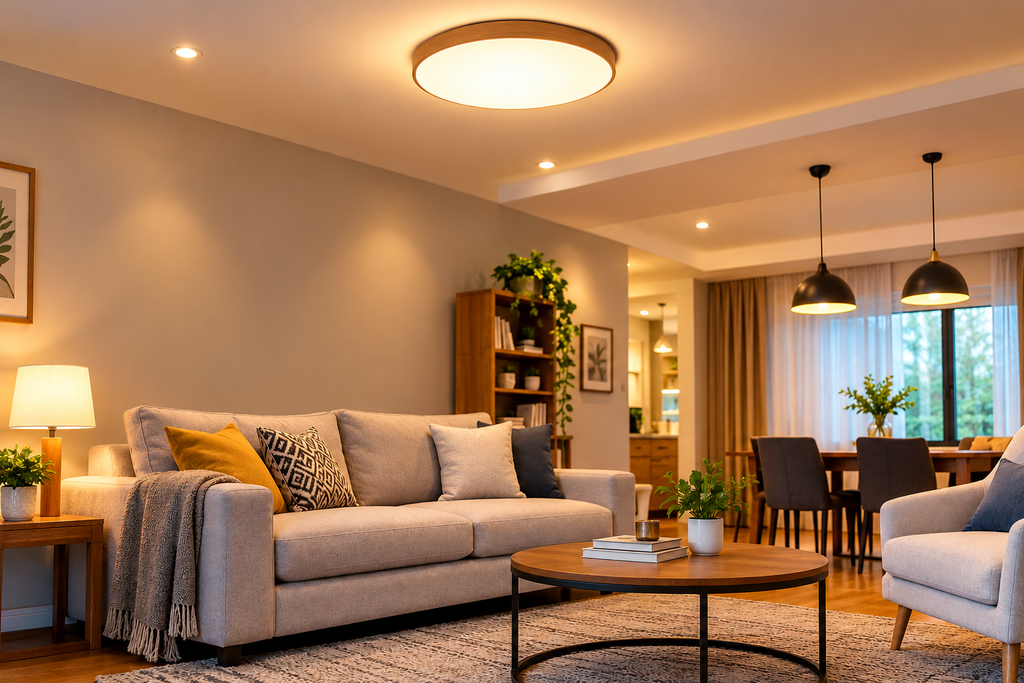
Lighting can transform the way a room looks and makes its use more pleasant. It also can alter the appearance of colors, furniture and surfaces throughout the day. Ceiling Lights are the primary source of lighting for many houses and can often become a focal point for the entire room.
When selecting the appropriate fitting, it is important to consider more than just the look. The amount of light, the size and use of the room are all significant. A bright kitchen will require a different kind of light than a quiet bedroom, and a hallway could benefit from clear light at all times.
The Colors Are Coordinated to the Room.
All rooms have varying functions, and lighting must be appropriate for the activities taking place. Kitchens frequently require greater light for preparing food and cleaning as well as for cooking. Using a bright fitting in the centre of the room, can help to spread the light evenly, particularly with the use of under cabinet fittings.
Living rooms tend to require a more relaxed atmosphere. There is a central light that can be used to illuminate the area in general, and the lights can be supplemented to facilitate reading or relaxing during the night. Bedrooms also enjoy warmer light, which can help the area to be more restful due to the sleep. Bedrooms also enjoy warmer light, which can help the area to be more restful due to the sleep.
High quality, functional lighting in bathrooms and hallways is often necessary. In such areas, it is important to select fittings to provide adequate coverage, while avoiding harsh glare.
Selecting the Correct Style and Application.
There are a wide variety of different ceiling fittings available, in many shapes, colours and finishes. Flush lights are nearer to the ceiling and will do fine in rooms that are not quite as tall. Pendant lights are lower, and are frequently installed over dining tables or kitchen islands. Spotlights can be used to illuminate specific areas of a space.
The style should also match the rest of the room as well. Quite simple metal fittings can be used in modern homes, while glass shades can be used in new and old houses.
Ceiling lights don’t have to be the most prominent fixture in the space. In many instances a simple design is better as it will fit in with the furnishings and provide a clean look to the room.
Theories on the Brightness and Bulbs.
The kind of bulb you have will make a tremendous difference for the room. Bedrooms and living rooms are often best suited to warm white light, as it makes for a more subdued appearance. Color white light can be beneficial in the kitchen, utility rooms and work spaces when a greater level of clarity is required.
Also consider the amount of light that the room requires. Depending on the space, you might need more than one fitting in a large room, which can be addressed with multiple lights, or a single light in a smaller room.
One popular option is LED bulbs, which are more energy-efficient than other types and can have a significantly longer lifespan. They can also be found in various brightness levels and colour temperatures, making it easier to make the right choice for every room.
Routine Practices Should Get the Position Right.
The location of the fitting can be a factor in achieving uniform illumination in a room. One of the most convenient choices is a central fitting; however, it doesn’t always provide sufficient illumination in all corners.
More than one source of lighting might be more appropriate in long rooms, open plan spaces or kitchens. A line of fittings can illuminate the room and minimize dark spaces.
Pendant lights require a bit more consideration as they are lower. This is a great idea over a table, but high enough in a walkway so as to not obstruct the path.
Practical Everyday Lighting
The purpose of good lighting is to make a room more usable, but not too noticeable. Ceiling Lights can be used to create the primary light source, and lamps and wall lights can be used to create softer light as needed.
Dimmer switches are also helpful in multi-purpose rooms. Your dining room may require different lighting levels during the day and the night, and your living room may require different levels for reading, watching television or relaxing.
It’s easier to make a good lighting choice every day when you consider brightness, position, bulb type and room size. The outcome should look and feel real, comfortable and appropriate for the real use of the room.
In Case You Missed It!
- How to Create a Perfect Lighting Plan for Your Space
- 8 Furniture Selection Tips Every New Homeowner Needs
- How to Choose Decorative Lighting for a Modern Interior